Jazz Blogs - BlogCatalog Blog Directory

July 14, 2008

"Marion Brown Quartet" - Marion Brown


Nabbed a copy of this on vinyl a few weeks back; don't get too excited, it's just a 2002 Get Back reissue, but none the less, very cool to have coming off the needle.

This is Brown's first session as a leader for ESP-Disk' and it's a solid performance. Capricorn Mood is a side-long track that starts with an Eastern influenced rhythm between Rashied Ali on drums and Ronnie Boykins and Reggie Johnson on bass. The melody kicks in cheerfully and whimsical before Brown sets off on his solo. This is then followed by Alan Shorter on trumpet. The two of them create an interesting juxtaposition over the repetitive bass line. Following all this is a dual bass improvisation and a heavy tom dominating drum solo by Ali before returning to the theme.

27 Cooper Square is a faster tempo cut with a higher collective of free improvisations. Contains the same personnel as Capricorn Mood minus Boykins on bass. Exhibition drops Alan Shorter on trumpet with the additive of Benny Maupin on sax. This track is similar to Capricorn Mood with it's Eastern influenced rhythms, but seems focused more on longer dissonance of notes. There's also a stellar solo by Ali before rapping up the set.
1967 - Esp Disk'.
Marion Brown - Sax; Alan Shorter - Trumpet; Benny Maupin - Sax; Ronnie Boykins - Bass; Reggie Johnson - Bass; Rashied Ali - Drums.

May 22, 2008

"Pharoah's First" - Pharoah Sanders


I think these recordings were created during an interesting transition in jazz, and it's definitely heard well in this session. By the mid 60s, Hard Bop was reaching it's peak and the Avant-Garde has been making a firm plant in jazz. With the exception of Stan Foster's playing, the Quintet's rhythm section showcases straight ahead, bop. The affects of Coltrane's playing is certainly heard through Sanders' licks, melodies, and improvising. It's interesting to hear how his progressive sense challenges the rest of the band, and Foster keeps up at times. This album is a must have.
1965 - ESP Disk'
.
Pharoah Sanders - Sax (Tenor); Stan Foster - Trumpet; Jane Getz - Piano; William Bennett - Bass; Marvin Pattillo - Drums.

April 11, 2008

"Slug's Saloon" - Albert Ayler

This is a beautiful set put on by Ayler's band. Often times I prefer his live recordings over his studio sessions because I think the lower produced quality add to the expressiveness of the music, but also because you can really hear more of what Ayler is feeling and how hard he and his band is playing.

Everyone plays here like it may be their last date. Michel Sampson's violin playing is out of this world and creates a wonderful relationship behind Albert's squeling. Ron Jackson frails on the drums giving you an artilary of rhythm and Albert's brother Donald plays like he is going to take off. With many reminders of the themes, the ensemble parts are nearly dead perfect, creating a balance between harmony and free improvising.

My favorite tune is Our Prayer, which Ayler incorporates marching band melodies (which I'm sure he got from his time in the military). He creates wonderful build-ups that are destroyed by controlled-chaotic (if that makes any sense), collective, free expressions. The album also features token composition like Bells, Ghosts, and Truth Is Marching In.

In the documentary, My Name Is Albert Ayler, drummer Sunny Murray stated that Albert "played with love," and that couldn't be more apparent than in these cuts.
1966 - ESP Disk.
Albert Ayler - Tenor Saxophone; Donald Ayler - Trumpet; Ron Jackson - Percussion; Lewis Worrell - Bass; Michael Sampson - Violin.

March 20, 2008

Ornette Coleman Quartet Reunion

These clips are such treats.  This is in Spain in 1987.  Talk about intuitive intelligence, it is absolutely amazing how in-sync these guys are with one another.  I love how Charlie swings his fiddle bass back and forth.  Enjoy these!!!


March 4, 2008

Music Millennium Picks

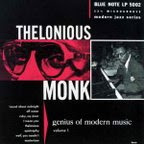
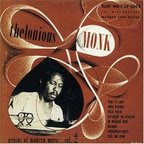
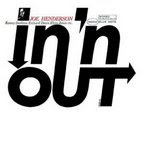
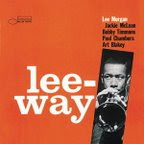
I had a handful of picks at a record store I used to work at.  I made cards that had brief written reasons to why these albums stood out to me.  As you can see, I have a thing for Blue Note.

'Genius of Modern Music' - Thelonious Monk
These lower produced tracks are my favorite recordings by T. Monk.  They're worth it just for the simplified versions of the Bebop wizard's compositions that I think enhance Monk's soling and improvising.  
1947, Vol. 1 / 1951, Vol. 2 - Blue Note.

'In 'N Out' - Joe Henderson
This pressing has five originals by Henderson that feature amazing chord structures that are brilliantly backed by McCoy Tyner, Richard Davis, and Elvin Jones.  Former Messenger Kenny Dorham also rips with sweet trumpet solos.
1964 - Blue Note.


'Lee-Way' - Lee Morgan
This practically Jazz Messenger line-up is pureley exciting for the fun, unique solos of Art Blakey.  It's rare to hear solos like that come from Blakey since he uses the Messengers to showcase the talents of his sidemen.  
1960 - Blue Note.


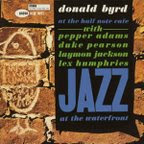
'At the Half Note Cafe' - Donald Byrd
When I think of cooking, I instantly think of this live recording.  Byrd and Pearson are a dangerous duo when it comes to compositions...  And cuts like "My Girl Shirl" and "Child's Play" really represent the groups ability.
1960 - Blue Note.


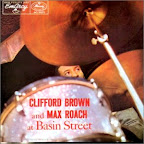
'At Basin Street' - Clifford Brown & Mac Roach
This record features awesome cuts by the powerhouse quintet that hosts Sonny Rollins, Richie Powell, and George Morrow... You'll hear wonderful horn licks and tremendous rhythm sections backed by Brown and Roach.
1956 - EmArcy / Verve.


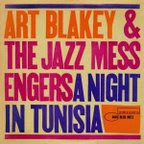
'A Night In Tunisia' - Art Blakey and the Jazz Messengers
Proabably one of the most prolific recordings of the Gillespie tune.  This album has a line-up that, what many think, is the best Messengers' roster... The disc is well worth it for Lee Morgan's, "Kozo's Waltz."
1960 - Blue Note.


February 18, 2008

"Broken Shadows" - Ornette Coleman


Coleman produces some great sets with his brief columbia sessions. Science Fiction, has more of a space-y and electronic aesthetic, where as Broken Shadows is more reminiscent of the Atlantic recordings but perhaps a bit more aggressive.

Besides the aggressiveness, you get all the boogie and swinging and positivity you’d expect. Tracks like “School Work” leave dancing melodies in your head (he has used this melody numerous of times in other compositions). Don Cherry plays at such a great level on these recordings and complements Ornette so well as he always does. Also accompanied is Bobby Bradford which makes an interesting variation to Cherry, and we also hear a strong tone difference of Dewey Redman against Coleman. Higgins and Blackwell are shown playing together making heavy rhythms and flooding sheets of percussion.

The last two tracks have Webster Armstrong joining the group singing some blues. The exciting juxtaposition of the harmolodics and vocals is like a wonderful roller-coaster filled with expression, feeling, and soul.

1972 - Columbia.

Ornette Coleman - Alto Sax; Don Cherry - Pocket Trumpet; Dewey Redman - Tenor Sax; Bobby Bradford - Trumpet,Charlie Haden - Bass, Billy Higgins - Drums, Ed Blackwell - Drums; Jim Hall - Guitar, Cedar Walton - Piano,Webster Armstrong - Vocals.

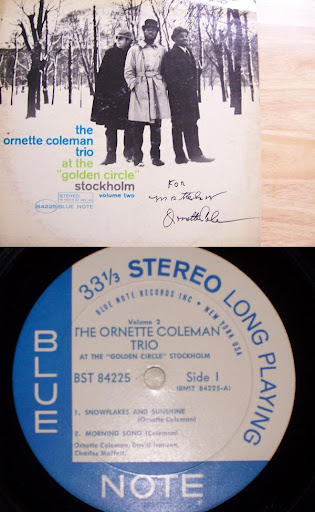
In spirit of Ornette, I’d like to talk about the PDX Jazz Festival. Not only did I get to see him perform, I saw a conversation with him and his son Denardo hosted by Howard Mandel (author Miles, Ornette, and Cecil: Jazz Beyond Jazz); at which I was able to shake Ornette’s hand and have him sign my Blue Note LP. “Only Thinking about improving the idea,” was the very first comment by him. And he continued to express his thoughts about sound, life, knowledge, sex... Everything! Always remaining in the most positive attitude and keeping a smile on his face.

Now from my understanding, all of the educational programs hosted by the festival were recorded and will eventually be available through KMHD. This one is worth checking out.

Later that night (to top off one of the best days in my life), I went and saw Coleman at the Schnitzer. Man, it was unbelievable. It was so transcendental and sublime, I spent most of the show with my eyes closed tapping my feet. Throughout the performance, melodies from classic compositions were mixed in. Like, “School Work”, “Beauty Is a Rare Thing”, “Lonely Woman”, “Turnabout”, and “Morning Song”. I feel privileged seeing how it has been 25 years since the last time Coleman played in Portland and perhaps one of the last.

February 10, 2008

"Reflections" - Steve Lacy


I think this is one of the finest, individualistic interpretations of Thelonious Monk tunes that I have heard.  You can tell Lacy really understood how to translate his melodies and work them with just the right amount of dissonance and tension; and when and when not to apply it.  The rhythm company performs top notch and Mal Waldron seems to fit in well with Neidlinger and can anyone honestly think of any time when they didn't enjoy hearing Elvin Jones.  

My favorite is "Hornin' In."  Waldron starts off with this vamping and then after the first bar or so Lacy steps in with his wonderfully pitched horn.  The way he plays his solos it seems like many horn players were trying to mimic five years later.  Waldron's phrasing seems spot on and the harmonies between him and Lacy are out of this world.

This is an album I could consistently listen to for the rest of my life.     
1958 - Contemporary.

Steve Lacy - Sax (Soprano); Mal Waldron - Piano; Buell Neidlinger - Bass; Elvin Jones - Drums.

February 1, 2008

"Out To Lunch" - Eric Dolphy


Out to lunch is a beautiful album.  Whenever I hear Dolphy I truly understand the ideas in his head and the dialect he's trying to make with his horn.  Anyway, this album cooks.  Everyone plays at such a high level, it's no wonder why so many refer to the album as the best of the era, the best Blue Note, the best of the avant-garde, or even some say one of the best jazz albums period.  The cuts have these whimsical aspects to them, but enough emotions and definitely the blues remains so that anything meaningful still exists.  Tony Williams, I think, is only 18 years old here, and he has already shown his prominence as a common drummer on many Blue Note dates and many to follow.  

It seems every time Dolphy plays, it's the last chance he'll ever have to play.  You can really here his passion in his recordings, and it's amazing how many ideas you can hear come out of one solo by him; and they're all so coherent and just right on.  Richard Davis responds well and also is excellent at guiding Dolphy, and Williams always knows what to hit and what to omit every time.  

I'll leave you with a link to this wonderful article by Milo Miles.
1964 - Blue Note.

Freddie Hubbard - Trumpet; Eric Dolphy - Sax (Alto), Flute, Bass Clarinet; Bobby Hutcherson - Vibes; Richard Davis - Bass; Anthony Williams - Drums.

January 27, 2008

"Symphony For Improvisers" - Don Cherry


This is a great performance lead by Cherry.  You get two different dimensions of sax coming from the jagged sounds of Pharoah Sanders and the more straining sounds of Gato Barbieri.  And when Sanders plays his piccolo, it really makes an interested contrast to Cherry's horn playing.  The best is when the musicians sort of sync up for those brief sublime moments, and the listener is unsure if they are just playing an arranged part, or if their ears are just adjusting to the actions of the musicians.  I love Karl Berger's vibe playing as well, and the way he follows Don Cherry's playing adds a nice effect.  Around 9:30 into the album title tracked, the group plays an ensemble part that is just breathtaking and is than followed by a swinging solo by Blackwell.  "Manhattan Cry" starts off almost like a ballad, but steadily evolves into a freeing collective of sounds that sticks with the album's theme.
1966 - Blue Note.

Don Cherry - Cornet, Trumpet; Ed Blackwell - Drums; Gato Barbieri - Sax (Tenor); Henry Grimes - Bass; Jean-François Jenny-Clark - Bass; Karl Berger - Piano, Vibraphone; Pharoah Sanders - Piccolo, Sax (Tenor).

January 23, 2008

"My Name Is Albert Ayler"


For the last year, Albert Ayler has been very important and influential to me. I was super excited to see My Name Is Albert Ayler, a film by Kasper Colling that the NW Film Center showed as part of their Reel Music Festival.

It mainly follows his brother, Donald, and his father, Edward. The filmmaker also travels abroad and interviews friends and old girlfriends from when Ayler spent time in northern Europe. This showed different opinions and perspectives offering unique ways of understanding Ayler as a person, but also show how he influenced everyone on different levels. Some of the best parts are interviews and phone conversations with the drummer Sunny Murray. He, very charismatically, shared stories of Albert and Donald. Murray talked about the tonal quality of Aylers playing with how he could expand on one note and get so much out of it. "Albert played it with love," is how Sunny referred to Albert playing his horn.

I was surprised that the story didn't focus on so much of the religious or spiritual concepts of Albert, but instead focused on his relationship with his brother and Maria Parks. They continue with how Albert began to be isolated, whether he was causing it or Parks, and how his brother was pushed out of the band, and leading to Donald's nervous breakdown and ultimately ending with Albert's death in 1970.

The Third aspect of the film was taken from audio interviews with Albert, and you hear his own voice, hauntingly over footage, music, and photographs. It leaves you with wonderful insight into his concepts and ideas. My favorite was when he was talking about playing at Coltrane's funeral and he said, "How could I do that, how could I play crying."

2005, Directed by Kasper Collin